logo

How Does a Transformer Foil Winding Machine Work? A Step-by-Step Process

June 28, 2026

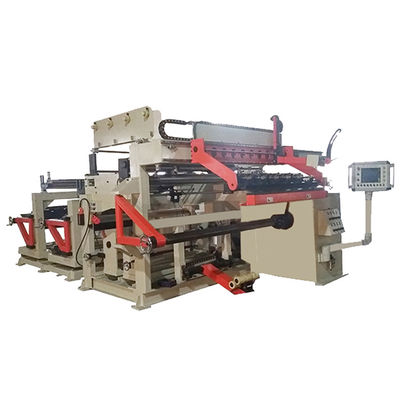
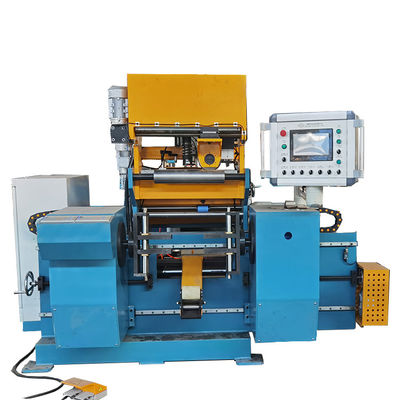
A transformer foil winding machine is a masterpiece of precision engineering. It takes a large, heavy roll of copper foil and a roll of insulating paper and combines them into a dense, electrically perfect coil capable of handling thousands of amps. This is not a simple "wrap it up" operation. Every step is carefully controlled to prevent a hidden defect that could cause a transformer to fail years later.

Let’s walk through the entire process, stage by stage.

Stage 1: Decoiling and the Art of Tension Control

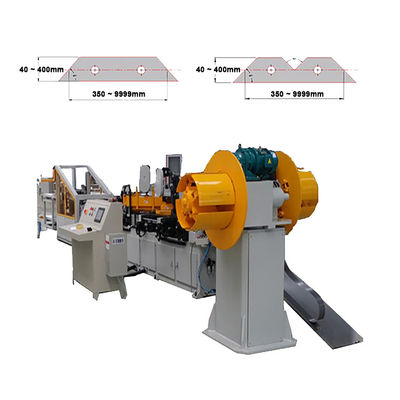
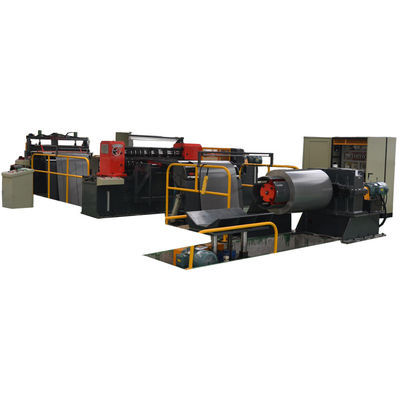
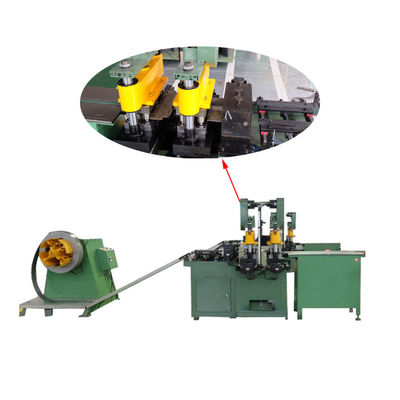
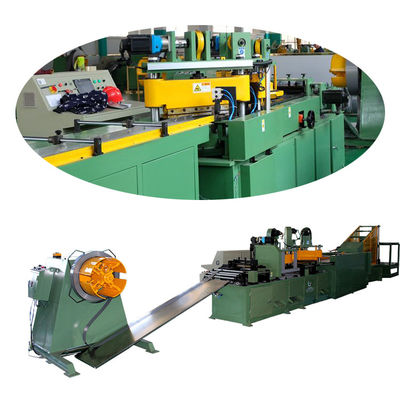
The process begins with two huge rolls mounted on the machine’s decoiling units. One holds the conductive foil, the other the interlayer insulation paper. These materials are not simply pulled onto the winding mold. The key to a mechanically stable and electrically sound coil is constant, precise tension. If the tension on the foil is too high, the copper will stretch and its cross-sectional area will reduce in spots, creating a weak point. If the tension is too low, the finished coil will be loose. A loose coil can vibrate when the transformer is powered, eventually wearing through the insulation. The machine uses a closed-loop tension control system, often with servo motors and load cells, to monitor and adjust the pull in real-time. This system compensates for the changing diameter of the supply roll as it unwinds, ensuring the linear tension on the material remains perfectly steady from start to finish.

Stage 2: Straightening and Deburring for Flawless Insulation

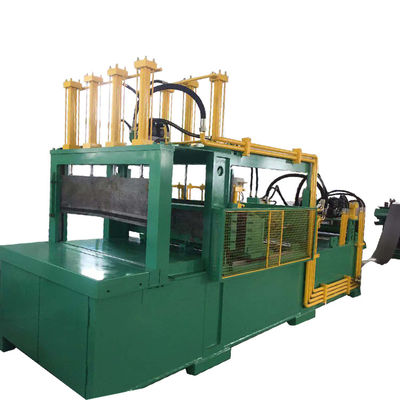
Freshly unwound from a coil, the foil has a natural "memory" curve, and its edges, having been slit from a wider master roll, are covered in microscopic but razor-sharp burrs. The foil now passes through a straightening unit. This consists of a series of rollers arranged in a staggered pattern that gently bends the foil in reverse, eliminating the curve and making it perfectly flat. Immediately after, the edges of the foil enter a deburring unit. This system uses oscillating abrasive blocks or precision rollers to burnish the top and bottom edges of the foil, breaking off the burrs without generating new sharp edges. This stage is the primary defense against insulation failure. Even a burr invisible to the naked eye can create a high-voltage stress point that will eventually lead to a short circuit.

Stage 3: The Critical Terminal Welding

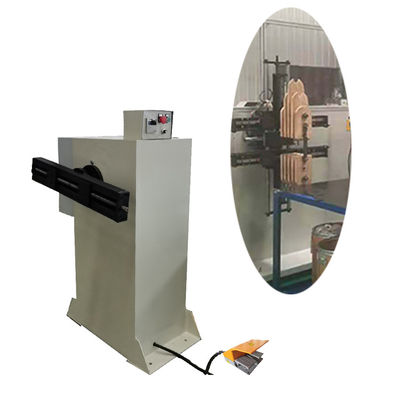
This step is what separates a foil winding machine from a simple rewinder. The coil needs heavy-duty terminals to connect to the transformer’s bus bars. At the very beginning of the winding process, the operator places a copper lead-out bar on the mold. The machine lays down the first layer of insulation and then the first turn of foil. The machine then pauses, and an integrated TIG (Tungsten Inert Gas) welding torch or a cold-pressure welding head is used to weld this bar directly to the foil. This weld must be entirely flat and smooth. Any bump, sharp edge, or welding spatter must be filed down flush. If this is not done perfectly, a sharp spot will puncture the multiple layers of insulation that will be wound over it.

Stage 4: The Synchronous Winding Dance

Now the main winding begins. The spindle, driven by a high-torque servo motor, rotates the mold. The foil and the insulating paper are fed onto the mold simultaneously, guided by an alignment system that ensures the edges of the foil are perfectly centered and the insulation is slightly wider, providing a safe electrical margin. This is a synchronous dance: one layer of paper, then one layer of foil, then another layer of paper. The PLC continuously calculates the build-up diameter and adjusts the rotation speed to maintain a constant linear winding speed. At the end of the foil’s run, the machine stops again for the final terminal weld, where the operator attaches the finish lead-out bar to the outermost layer of foil.

Stage 5: Automatic Shearing and Coil Removal

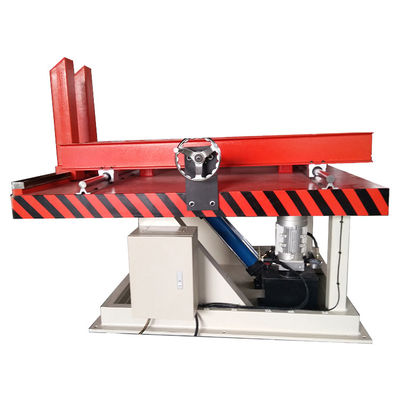
With the final weld complete, the PLC triggers the shearing unit. A heavy-duty guillotine blade cuts the foil cleanly, and another blade cuts the paper. The finished coil, now a solid, monolithic square or rectangle, is ready to be extracted. Depending on the machine’s level of automation, a hydraulic extractor or a crane arm removes the heavy coil from the mandrel.

The entire process is a blend of brute force and delicate finesse. A transformer foil winding machine applies tons of tension yet must handle the materials with enough care to not create a single microscopic defect. It is this precision that guarantees the safety and 30-year design life of a modern transformer.

Entre em contato conosco
Pessoa de Contato : Mr. Jack Liao
Telefone : +86 18962417880
Caracteres restantes(20/3000)